Macrame earrings and keychains use the same knots as a wall hanging, just in cord between 1 and 3 mm thick and on a metal ring instead of a dowel. A pair of earrings takes an evening, uses a few yards of cord, and needs only ear wires, jump rings and two pairs of flat pliers beyond your usual macrame kit. They are also the best use for the short ends left over from bigger pieces.
Cord Sizes for Small Work
Small pieces need thin cord, or the knots look lumpy and the earring gets heavy.
- 1 to 1.5 mm is the micro macrame range. Bobbiny sells a 1.5 mm cotton cord specifically for mini projects, keychains and jewelry, and says one 100 m spool makes a large amount of jewelry. Thin braided polyester cord (Ganxxet makes a 1 mm one) gives crisp knots that do not fuzz.
- 2 to 3 mm suits keychains, chunkier statement earrings and coasters. Ganxxet's guidance puts jewelry, keychains and coasters in the 1.5 to 3 mm range.
- Waxed cord has a coating that makes it stronger and more water resistant; Ganxxet notes it is often used for jewelry.
For earrings that should fan out into a soft fringe, choose single twist or 3-ply cotton, which brushes out. Braided cord stays as a tidy cylinder and cannot be brushed, which suits keychains that get handled a lot.
Findings and Tools
Findings are the small metal parts that turn knotting into jewelry.
- Ear wires (fish hooks or lever-backs) go through the ear.
- A base ring to knot onto: a small metal ring, hoop or shaped frame. Cords are mounted on it with lark's head knots exactly as on a dowel.
- Jump rings connect the base ring to the ear wire. Use two per earring if the piece needs to face forward.
- Key rings or clasp keychains for keychains, with a split ring or a swivel clasp.
- Two pairs of flat-nose or chain-nose pliers for opening jump rings.
- Sharp small scissors, a ruler, a fringe comb or old toothbrush, and fabric stiffener for shapes that should stay flat.
If the wearer is sensitive to some metals, look for findings that state what they are made of, and avoid unlabeled ones.
Open a jump ring by twisting, not pulling. Hold it with a plier on each side of the gap and move one side toward you and the other away, like opening a door. Pulling the ends straight apart distorts the ring so it never closes flush, and that gap is where earrings come apart. Close it with the reverse twist until the ends meet with no visible gap.

Scaling Knots Down
The knots in our basic macrame knots guide work the same in thin cord, but a few things change at small scale:
Square knots. Tighten each half knot fully before starting the second half. With thin cord, a loose first half shows as a gap that larger cord would hide. Pin the work to a cork board or clip it to a clipboard so you can pull firmly.
Spirals. A spiral of half knots in 1.5 mm cord twists quickly and makes a neat, narrow column for earring drops and keychain stems. Count your knots so both earrings have the same number.
Double half hitches. Diagonal rows of double half hitches make leaf, feather and chevron earrings. Keep the filler cord taut and at a consistent angle; at this scale a difference of one knot is visible.
Fringe. Leave the ends longer than you need, brush them out, then stiffen if the shape matters. Ganxxet suggests spray fabric stiffener for shaped pieces such as feathers and leaves. Lay the earring flat, mist it, shape the fringe with your fingers, let it dry completely and trim the outline last with sharp scissors.
A Simple Earring Method
This is a structure you can adapt to most fringe earring designs.
- Mount 6 to 10 short cords on a small base ring with lark's head knots. Cut them about eight times the finished drop, the same lark's head rule used for larger pieces; for a 2-inch earring that is only 16 inches per cord.
- Tie one row of square knots across, using four strands for each knot.
- Lay the outermost strand on each side diagonally toward the center and tie double half hitches over it with the other strands, forming a V.
- Brush out the ends below the V and trim into a point, a curve or a straight line.
- Attach the ear wire to the base ring with a jump ring.
- Make the second earring immediately, with the same cords and knot count, and compare them side by side before trimming.
Fringe earrings and tassel earrings are the two most common shapes:
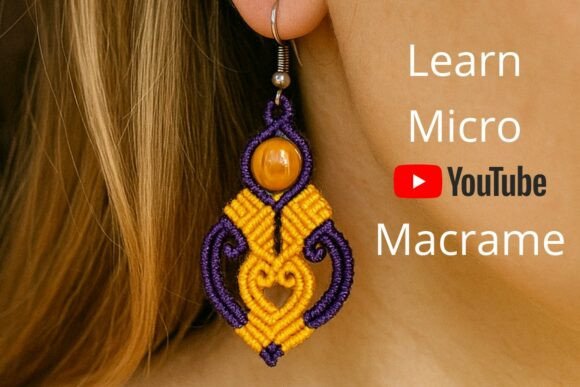
Micro Macrame Earrings
See the listing ↗
Macrame Tassel Earrings
See the listing ↗
Boho Chic Net Bag, Macrame DIY Pattern
See the listing ↗From the collection Macrame Bags & Accessories. New Creative Fabrica members get 10 free downloads, and any of these can be one of them.
A Simple Keychain
Ganxxet's beginner keychain shows how far three knots go. Six cords are mounted on a key ring with lark's head knots to make twelve strands. Rows of square knots (three, then two, then three and so on) make a diamond net, a few rows of half hitches add lines, and the ends are trimmed to about two inches and brushed out.
A few tips for keychains that last:
- Use braided or 3-ply cord, which stands up to being in a pocket better than soft single twist.
- Finish with a gathering knot around all the strands to make a neat tassel.
- Thread a wooden bead on the center strands before the gathering knot. Check the hole size against your cord before you buy beads.

Making a Set From Leftovers
Short cord ends from a wall hanging or plant hanger are often too short to reuse in a big piece and just right for small ones. A coordinated set might be:
- a pair of earrings in the main color,
- a keychain with a tassel in the same cord,
- a small feather or leaf charm for a bag zipper.
Keep a jar of offcuts sorted by cord type, since cotton single twist, 3-ply and braided behave differently in the same design. If you are matching a gift to a larger piece, keep a few yards of that cord aside when you cut it.
Small patterns made for gifting and favors use the same thin-cord techniques:
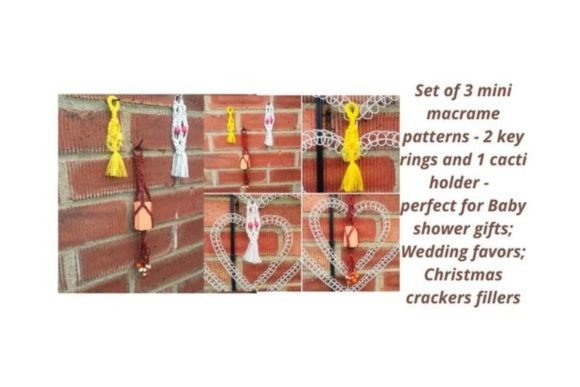
Boho Wedding Favors Trio Macrame Pattern
See the listing ↗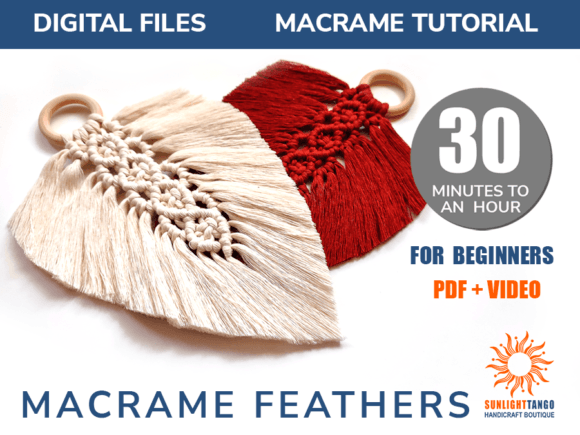
Macrame Feather PDF Pattern
See the listing ↗
Macrame Flower Tutorial
See the listing ↗From the collection Macrame Wall Hangings. New Creative Fabrica members get 10 free downloads, and any of these can be one of them.
Thin Cord, Findings and Pliers
Small pieces need thin cord and a few metal parts. Pliers open and close jump rings without bending them out of shape, and a foam board holds the work while you knot.
 Natural cotton macrame cord, 2 mmNOANTASee it on Amazon
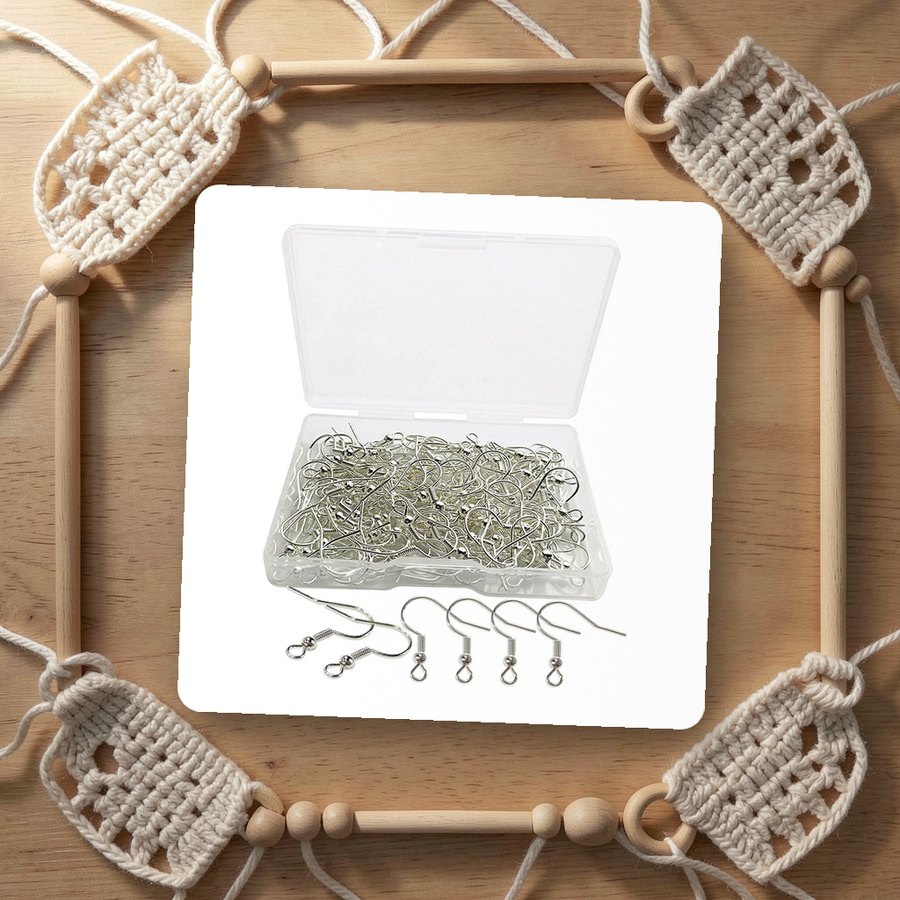 Fish hook ear wiresTTSAMSee it on Amazon
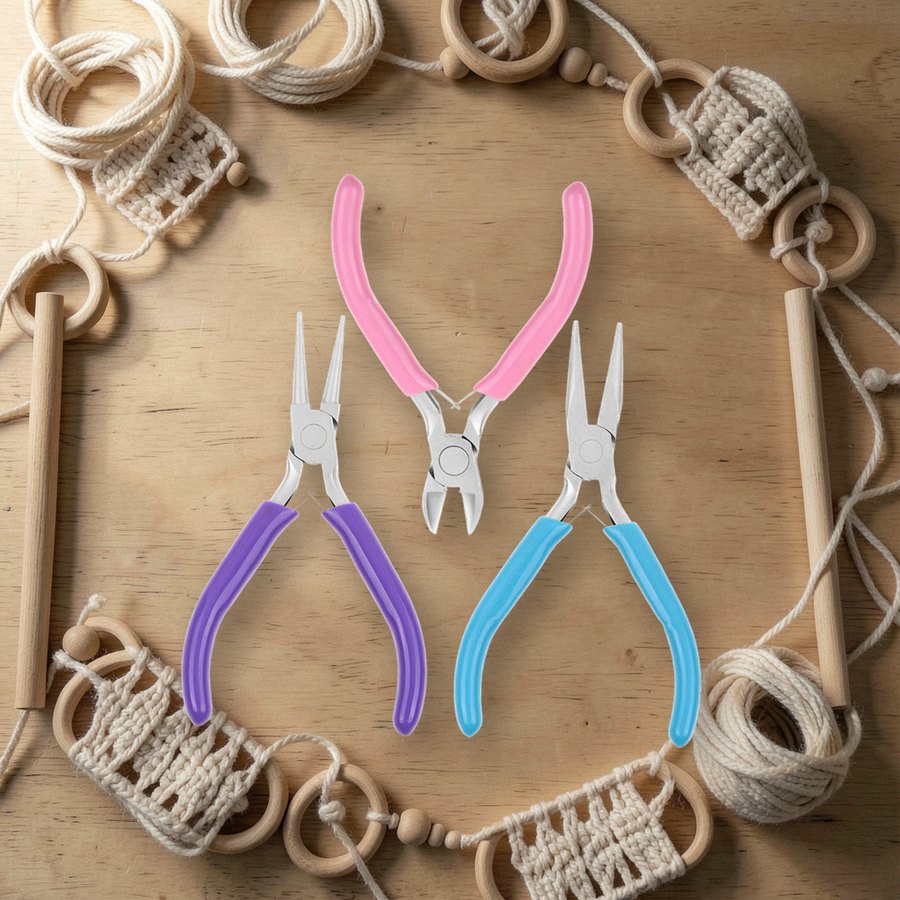 Jewelry pliers, set of threeshynekSee it on Amazon
 Foam macrame board, 11.5 x 15.5The BeadsmithSee it on Amazon
As an Amazon Associate we earn from qualifying purchases.
For a wearer who reacts to some metals, read what the ear wires are made of before you buy.
Where to Go From Here
Choose your cord with the help of our macrame cord guide, and if you are new to the craft, read macrame for beginners first. When you are ready for something bigger with thin-to-medium cord, a bag is the natural next step; browse the macrame bags and accessories collection.
Patterns for This Project
Macrame Bags & Accessories11 hand-picked · open the collection → Macrame Wall Hangings23 hand-picked · open the collection →