
For most macrame projects, buy soft cotton cord between 3 and 5 mm: single twist if you want a fluffy brushed fringe, 3-ply if you want crisp knots and a wavy fringe, braided if you expect to untie a lot or need a sturdy bag. Then cut each cord about four times the finished length, or eight times if it is folded over a dowel. The rest of this guide explains why, and when to choose something else.
Construction: Single Twist, 3-Ply and Braided
The way a cord is put together matters more than its fiber for how a piece looks.
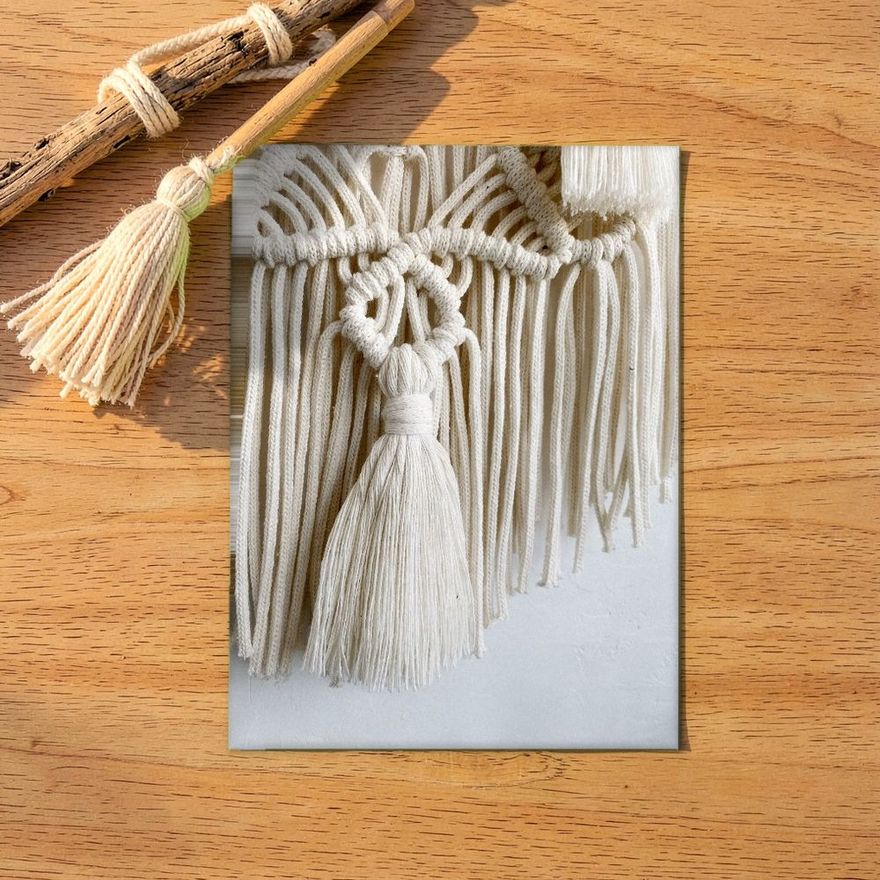
Single twist cord (often called string) is a bundle of fibers twisted in one direction. It is the softest to work with and gives the plush, brushed fringe seen on many modern wall hangings. The downside is that it can unwind and fray when you undo knots, so Ganxxet describes it as harder for beginners. Niroma Studio, which sells single twist in 3, 5 and 7 mm, still recommends its 5 mm string as a first cord because its medium-tight twist survives being unknotted a few times if you are careful.
3-ply rope is three twisted strands twisted around one another. Bobbiny calls its 3-ply the strongest cord it makes, and Niroma uses rope for furniture and pieces that bear real weight. Knots look defined, and an untwisted end opens into a wavy, crimped fringe.
Braided cord is many threads braided together, often around a core. Bobbiny's 3 and 5 mm braided cords have a cotton core, and its 9 mm Jumbo has a polyester core so it keeps its shape in oversized pieces. Braided cord is the easiest to unpick and retie, and it is the usual choice for bags, but it cannot be brushed into fringe. The very tight braided cotton sold as sash cord is extremely strong, stiff and hard on the hands.
Fiber: Cotton, Recycled Cotton, Jute and Synthetics
- Cotton is the default for indoor work: soft, easy to knot, takes dye well and brushes out.
- Recycled cotton is made from textile waste. Bobbiny describes its process: factory offcuts and used cotton clothing are shredded, the colors are blended to reach a shade, and the fiber is spun into new thread. Because of that, two batches of the same color can differ slightly.
- Jute and other bast fibers (hemp, linen) give a rustic look. Ganxxet notes that 1970s macrame was often jute and cotton twine and was rough to the touch, which is why soft cotton has taken over for wall hangings. Jute still suits rustic pieces where the rough texture is the point.
- Synthetics such as polypropylene (sold under names like Bonnie cord) and nylon are for outdoor projects. Niroma explains that polypropylene does not mold as quickly as cotton, but its fringe turns frizzy.
Buy all the cord for one project at the same time. Niroma Studio warns that colored cord varies between dye lots, and Bobbiny says the same of its recycled colors. A second order later may not match.
Which Size for Which Project
Cord is sized by diameter in millimeters. The ranges below combine the guidance from Bobbiny and Ganxxet.
| Diameter | Best for | Notes |
|---|---|---|
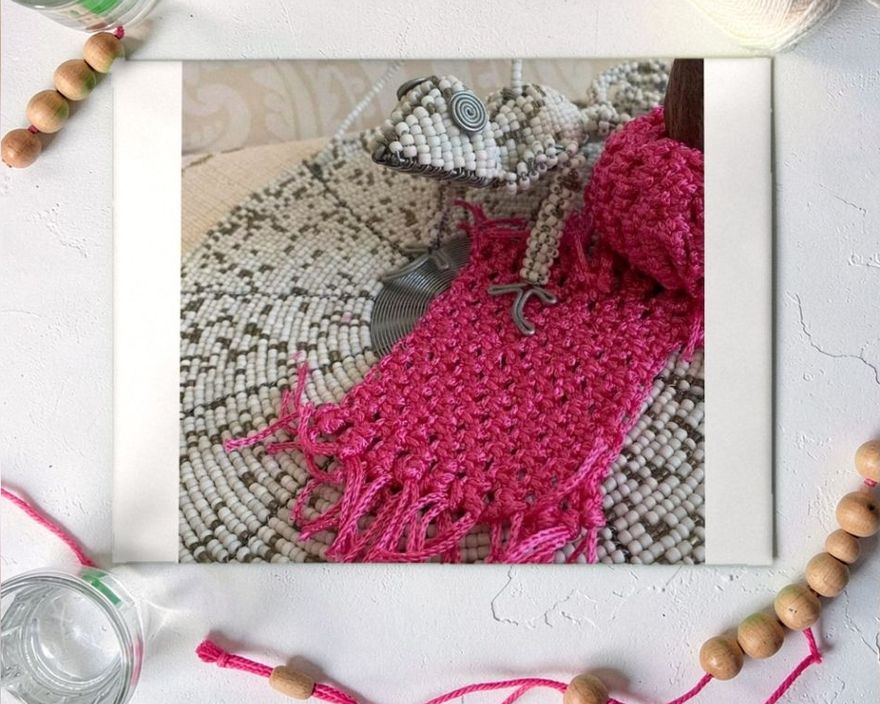
| 1 to 2 mm | Earrings, bracelets, keychains, micro macrame | Bobbiny's 1.5 mm cord is sold for jewelry and mini projects; braided poly 1 mm also exists |
| 3 mm | Coasters, small plant hangers, detailed patterns | Bobbiny suggests 3 mm when a design has fine detail |
| 4 to 5 mm | First wall hangings, plant hangers, bags, table runners | Ganxxet's beginner range is 4 to 7 mm |
| 6 to 9 mm | Large wall hangings, chunky pieces, thick fringe | Works up fast; Bobbiny recommends its 9 mm for the fullest fringe |
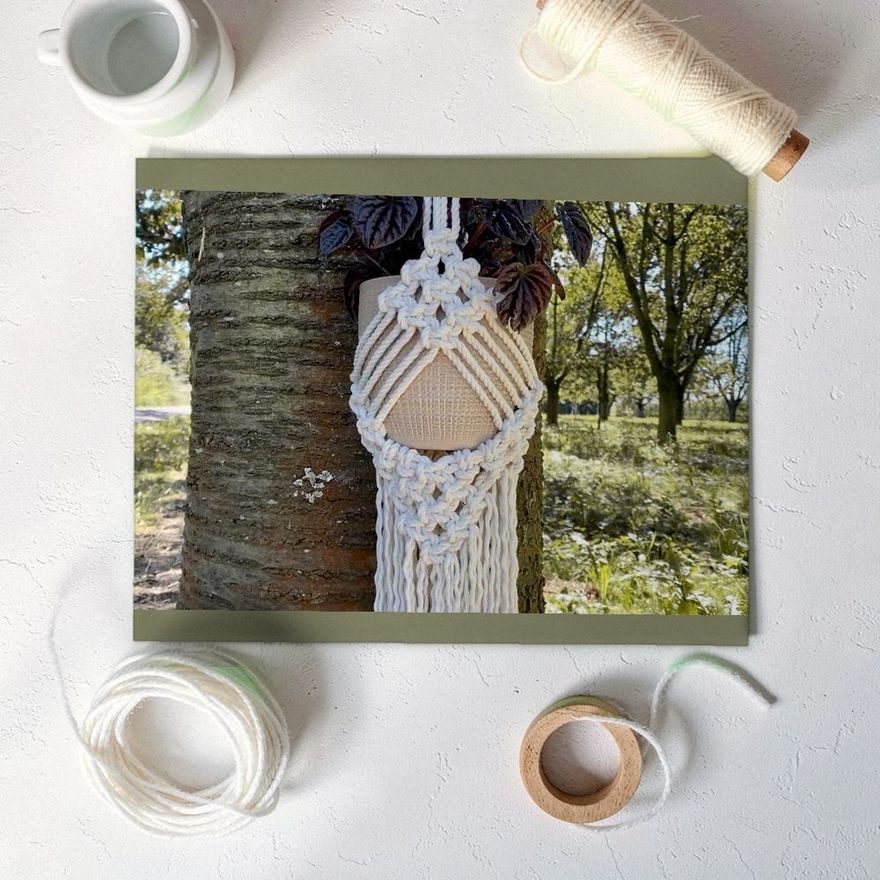
A thicker cord makes a larger knot, so the same pattern grows in size and uses more cord if you swap in a fatter cord. Stick close to the size a pattern lists. For a plant hanger, Niroma says 3, 5 or 8 mm single twist are all strong enough, so the choice there is about looks.
Sizes are approximate. Niroma measures its cord after it is cut and has relaxed, and says the diameter can differ by 1 to 1.5 mm from the tightly wound spool; humidity and storage change it too.
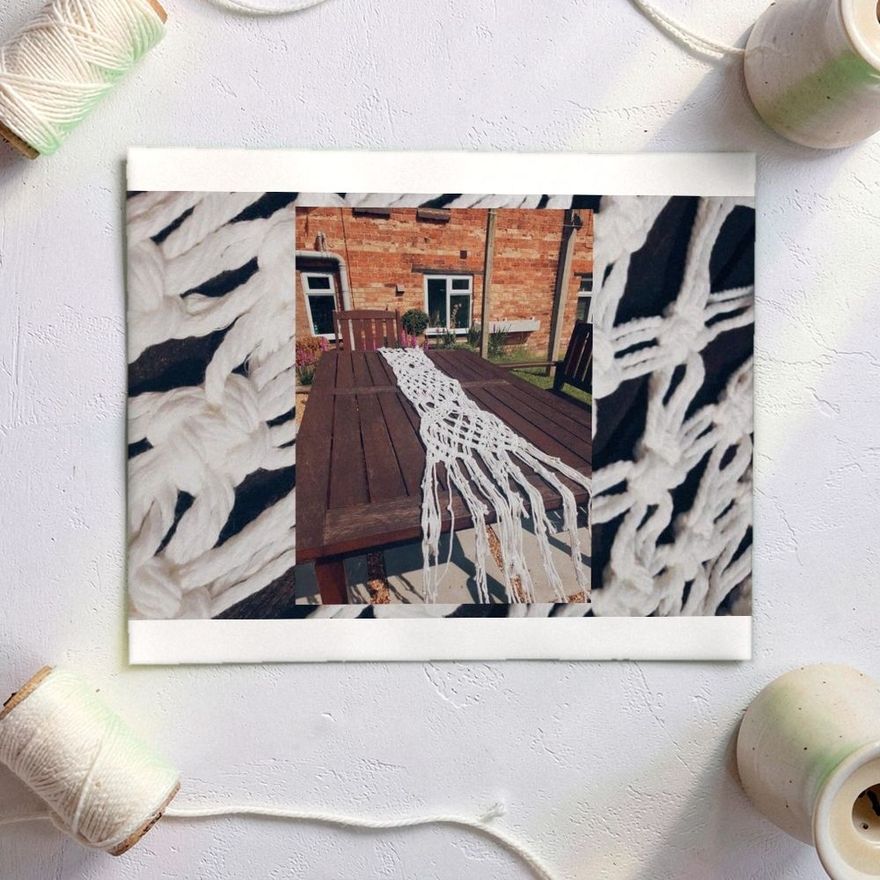
Table runners and placemats are a good test of how cord size changes a flat design:

Boho Chic Easy Macrame Runner Tutorial
See the listing ↗
Macrame Vintage Beaded Placemat Pattern
See the listing ↗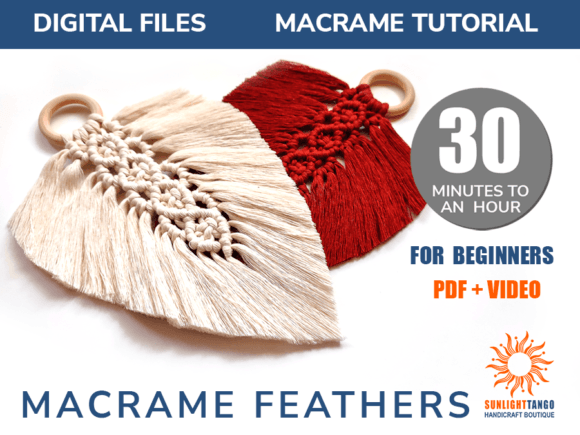
Macrame Feather PDF Pattern
See the listing ↗From the collection Macrame Wall Hangings. New Creative Fabrica members get 10 free downloads, and any of these can be one of them.
How Much Cord to Buy
Most patterns list the number and length of cords. When you design your own, use Ganxxet's rule of thumb: about four times the finished length for each cord, or eight times when the cord is folded over a dowel with a lark's head knot. Dense knotting, spirals and thick cord push that higher.
For width, Niroma Studio's estimate for a large panel in 4 mm 3-strand rope was roughly one mounted cord per inch of dowel.
A worked example for a wall hanging 24 inches wide with 30 inches of knotting:
- Cords: about 24, one per inch.
- Length per cord: 8 x 30 = 240 inches, or 20 feet.
- Total: 24 x 20 = 480 feet, about 146 meters.
Most Bobbiny spools are 100 meters (its 9 mm cord comes in 30 meters), so this piece needs two spools. Cut one cord first, knot a short section, and check that the rule fits your knotting density before cutting the rest. There is a full size planning walk-through in our wall hanging tutorial.
Brushing a Fringe
Single twist and 3-ply cotton can be brushed into fringe; braided cord cannot.
- Untwist each cord end by hand down to the length of fringe you want.
- Hold the cord just above the untwisted part so you do not pull the knots.
- Brush from the top of the untwisted section downward with a fringe comb or a fine pet slicker brush, a little at a time.
- Lay the fringe flat and trim it straight or into a shape with sharp scissors. Trim after brushing, because the brushed fibers spread and the ends look uneven until they are cut.
For shaped pieces such as leaves and feathers, Ganxxet suggests a spray fabric stiffener after brushing to hold the shape.
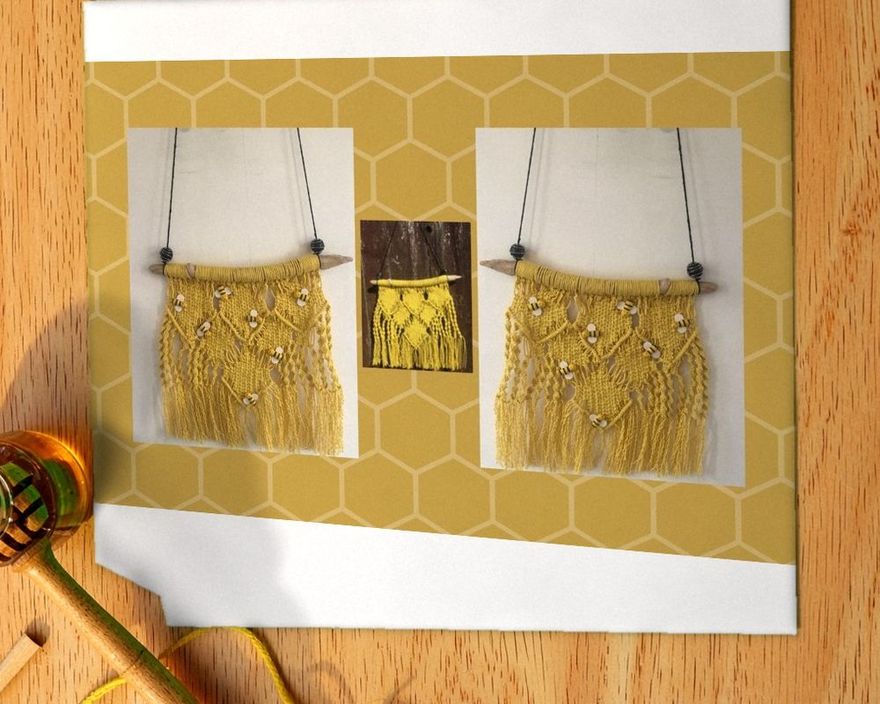
Caring for Cotton Cord Pieces
Bobbiny advises against machine washing its cords. Hand wash gently in lukewarm water, about 30°C (86°F), with a mild detergent, and use a vacuum cleaner to refresh a dusty piece. Lay pieces flat or hang them to dry in shape.
Bags take the most wear, which is why braided and 3-ply cords are the usual choices for them:
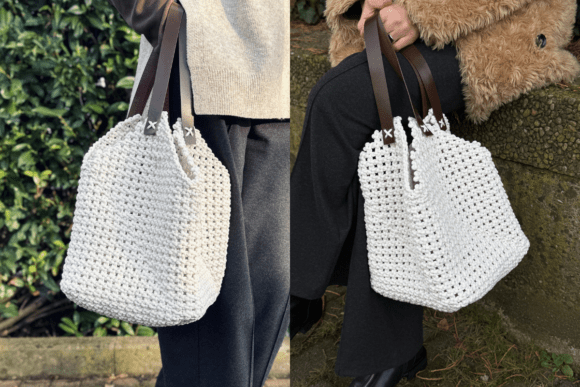
Macrame Tote Bag PDF Pattern
See the listing ↗
Macrame Bag DIY PDF Pattern
See the listing ↗
Macrame Bag PDF Pattern + Video Tutorial
See the listing ↗From the collection Macrame Bags & Accessories. New Creative Fabrica members get 10 free downloads, and any of these can be one of them.
Three Cord Sizes and a Fringe Comb
Here is cotton cord in three of the sizes from the table, so you can compare spool lengths before you buy. The comb is for brushing out fringe.
 Natural cotton macrame cord, 2 mmNOANTASee it on Amazon
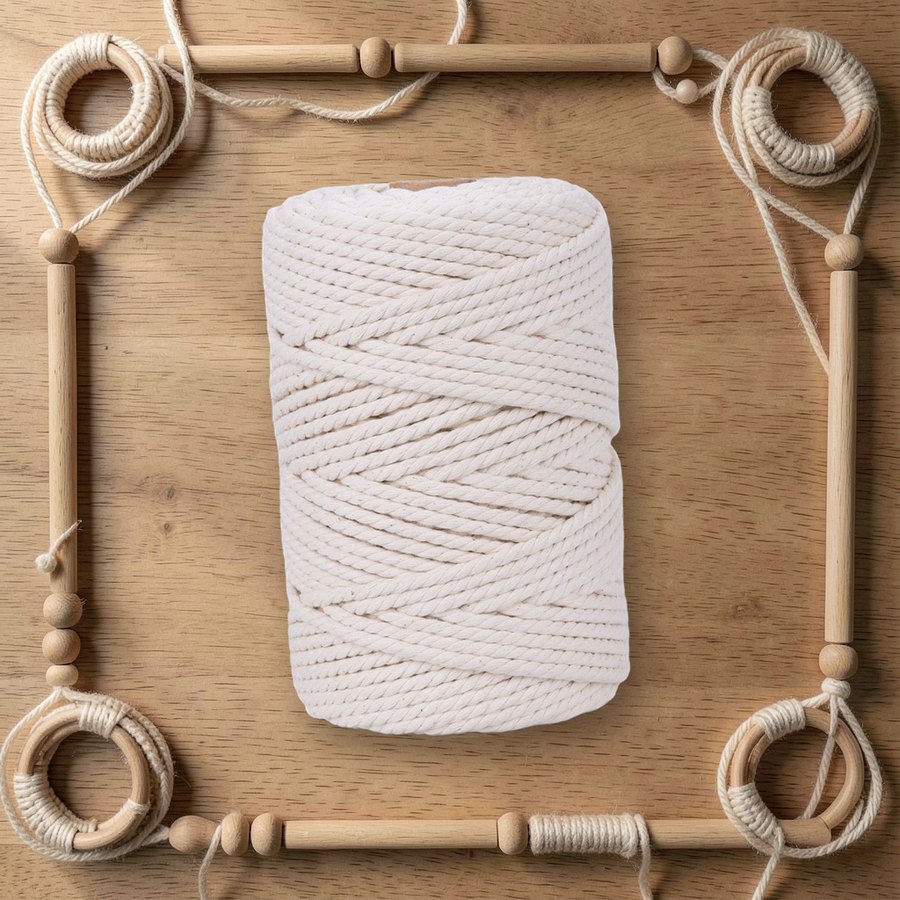 Natural cotton macrame cord, 4 mmNOANTASee it on Amazon
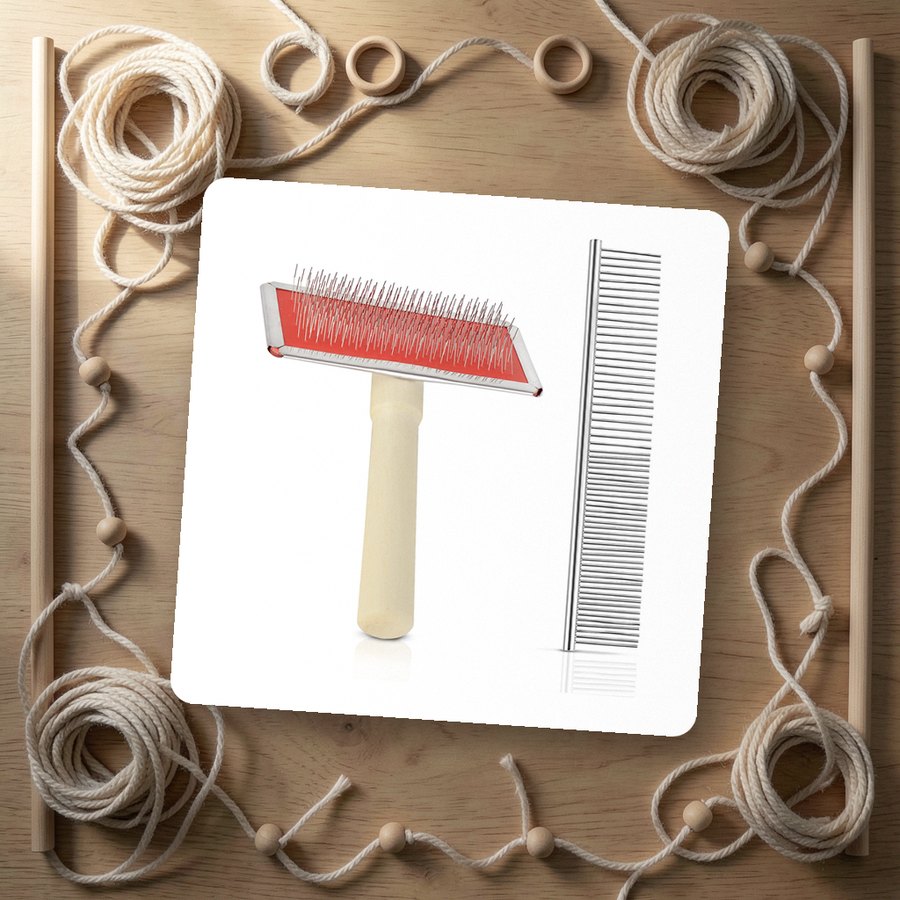 Stainless steel fringe combs, two-packWANGDEFASee it on Amazon
As an Amazon Associate we earn from qualifying purchases.
Check each listing for the construction, since only single twist and 3-ply cord brush out.
Choosing Your Next Cord
Match the cord to the first project you plan: 4 or 5 mm single twist for a wall hanging, 3 to 5 mm for a plant hanger, braided or 3-ply for a bag, and 1.5 to 2 mm for earrings and keychains. Keep a short labeled sample of each cord you buy, so you can compare knot size against a pattern photo next time.
Patterns for This Project
 Macrame Wall Hangings23 hand-picked · open the collection →
 Macrame Bags & Accessories11 hand-picked · open the collection →